
Tabla de contenido
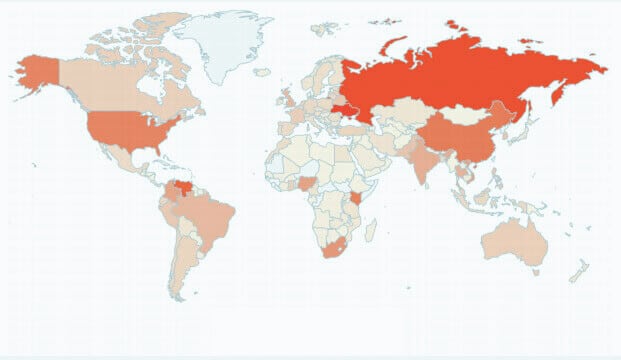
The Global Adoption of Cryptocurrencies, Cryptocurrencies, once considered a niche technology, have evolved into a global phenomenon with far-reaching implications. Beyond the realms of speculative investments, cryptocurrencies are gaining traction as currencies, banking solutions, and transformative tools for various countries worldwide. In this article, we’ll explore the adoption of cryptocurrencies throughout the world, highlighting countries that have embraced them as currencies, those utilizing blockchain technology for banking and other purposes, and regions considering adoption, including South American and African countries.
The Global Adoption of Cryptocurrencies, Cryptocurrencies as National Currencies
1. El Salvador: The Bitcoin Trailblazer
In September 2021, El Salvador made history by becoming the first country to adopt Bitcoin as legal tender. The government’s move was driven by the desire to increase financial inclusion among the unbanked population, facilitate remittances, and stimulate economic growth. Citizens can now use Bitcoin for everyday transactions, and the government even introduced Bitcoin ATMs across the country.
2. The Eastern Caribbean Central Bank: DCash
The Eastern Caribbean Central Bank (ECCB), which represents eight Eastern Caribbean countries, introduced DCash, a digital currency, as legal tender. Built on blockchain technology, DCash aims to enhance financial inclusion, reduce transaction costs, and improve the efficiency of cross-border transactions within the Eastern Caribbean Currency Union.
3. Other Nations Exploring National Cryptocurrencies
Several countries, including Ukraine, the Bahamas, and Cambodia, have been exploring the issuance of central bank digital currencies (CBDCs). While not decentralized cryptocurrencies like Bitcoin, CBDCs leverage blockchain technology to enhance the efficiency and security of their national payment systems.
Cryptocurrencies for Banking and Financial Services
1. Switzerland: The Crypto Valley
Switzerland, known as the Crypto Valley, has become a hub for blockchain technology and cryptocurrency-related businesses. The country has embraced cryptocurrencies not only as a means of payment but also as a foundation for financial services, including digital asset banking and blockchain-based securities trading.
2. Kenya: Crypto for Cross-Border Payments
Kenya’s mobile payment ecosystem, M-Pesa, has integrated with cryptocurrency platforms like BitPesa (now known as TransferWise) to facilitate cross-border payments. By doing so, it has provided an efficient solution for Kenyans to send and receive money internationally.
3. Nigeria: Bitcoin for Remittances
Nigeria’s vibrant cryptocurrency community has been utilizing Bitcoin and other cryptocurrencies for remittances and cross-border trade. Cryptocurrency exchanges and peer-to-peer platforms have become essential for many Nigerians to access global financial markets.
Countries Considering Adoption
1. South American Countries
Several South American nations are actively considering or exploring cryptocurrency adoption:
- Argentina: Facing economic challenges, Argentina is exploring cryptocurrency adoption as a means to stabilize its financial system.
- Venezuela: Despite a rocky relationship with cryptocurrencies like Bitcoin, Venezuela is exploring the development of a digital bolívar to combat hyperinflation.
- Brazil: Brazil’s central bank is conducting experiments with a digital real (CBDC) and is open to the use of cryptocurrencies.
2. African Countries
In Africa, where access to traditional banking remains a challenge for many, cryptocurrencies have been gaining popularity:
- Ghana: The central bank is in discussions regarding the possibility of issuing a digital currency.
- Nigeria: While the government has been cautious, the adoption of cryptocurrencies continues to grow among citizens.
- South Africa: The country has seen an increase in cryptocurrency adoption and interest among businesses.
Challenges and Considerations
The adoption of cryptocurrencies on a national or regional scale is not without challenges and considerations:
- Regulatory Uncertainty: Many countries are navigating the complexities of cryptocurrency regulation, balancing innovation with consumer protection and financial stability.
- Volatility: Cryptocurrency price volatility can pose risks to economies and users, making it necessary to develop strategies to manage these fluctuations.
- Financial Inclusion: While cryptocurrencies hold potential for financial inclusion, they also require accessible infrastructure and digital literacy.
The Role of Cardano in Global Adoption
- Cardano, a third-generation blockchain platform, has emerged as a key player in the global adoption of cryptocurrencies. Its unique features, including a research-driven approach, sustainability, and scalability, have positioned it as a contender for widespread adoption. Cardano’s impact can be seen in several areas:
- 1. Africa’s Blockchain Infrastructure
- Cardano’s partnership with Input Output Hong Kong (IOHK) aims to create blockchain infrastructure across Africa. This initiative seeks to bring digital identities, supply chain tracking, and financial services to the continent.
- 2. Decentralized Finance (DeFi)
- Cardano’s blockchain supports DeFi projects that offer decentralized lending, liquidity provision, and asset management. DeFi platforms built on Cardano are poised to revolutionize financial services globally.
- 3. Scalability and Sustainability
- Cardano employs a proof-of-stake (PoS) consensus mechanism, making it more energy-efficient and scalable compared to Bitcoin’s proof-of-work (PoW). This sustainability and scalability align with the needs of countries seeking blockchain solutions.
- Conclusion
- Cryptocurrencies are no longer confined to the realm of speculation; they are ushering in a global financial transformation. From El Salvador’s pioneering move to embrace Bitcoin to the Eastern Caribbean’s use of DCash for financial inclusion, the world is witnessing a shift towards digital currencies. Countries are exploring cryptocurrencies as national currencies and utilizing blockchain technology to innovate in banking and cross-border transactions. In South America and Africa, where traditional banking systems face challenges, cryptocurrencies offer hope for financial inclusion and technological advancement.
- As countries contemplate cryptocurrency adoption, it is essential to address regulatory, security, and educational concerns. The global adoption of cryptocurrencies signifies a transformative change in how we perceive and employ money and financial services. Despite the challenges, the potential benefits of economic growth, financial inclusion, and innovation continue to drive the global crypto revolution. Cardano’s innovative approach further cements its role as a key player in shaping the crypto adoption.